

In a season that will have many questions to be answered, what’s one more, right
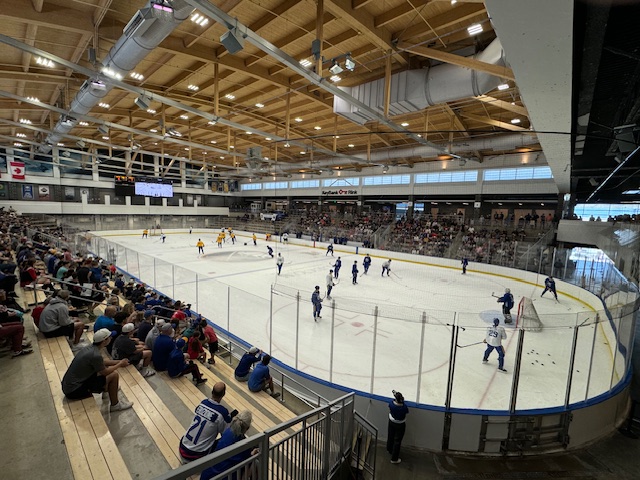
We’ve made it to September and it’s only a matter of days before Buffalo Sabres prospects hit the ice against other young players around the NHL at HarborCenter in what’s become the annual rite of passage from hockey offseason to the regular season.
It’s been an offseason for Buffalo that’s been complete for months now but has felt somewhat incomplete still as training camp approaches in two weeks’ time. That’s not the most comfortable feeling headed into what’s a must-win season for this team. It’s downright worrisome, to be frank. Last season, a lot of us thought the big step that was coming for this group was going to happen and the growth that happened two seasons ago was, indeed, very real and would imminently be built upon.
Ah, naivety.
Getting as close to the playoffs as they did two years ago didn’t spur them on and the weight of expectations hung around their necks while they tried to swim to safety all season long. A deeply unfortunate turn of events that saw them trade the team captain at the deadline and fire the coach after the season.
But we’ve talked about that stuff already. We’ve talked about the moves made and the moves that were not and it got me thinking of a line out of Rush’s final album “Clockwork Angels.” I’ll spare you the nuts and bolts of the story, but the main character of the concept album is posed a question that sticks in my own head moving through life as time trudges onward and aging continues unabated:
“What do you lack?”
Seems a bit much to pose such a massive question meant to spring about thoughts pertaining to life and its collective experiences to something as mundane as hockey, but let’s swim around in this one, because it is that big of a season for the Sabres.
What do the Sabres lack?
The content below was originally paywalled.
Asking that kind of question about the Buffalo Sabres means being asked about the meaning of life because it’s open-ended and the answer to it can be, legitimately, anything based on what the person answering it perceives.
It’s a question that has a lot of options for a good answer and one that means something to the operation as a whole. And there are a few of them, both big picture and short focus, that came to mind right away.
They lack another scorer
In the immediacy of Jeff Skinner’s buyout and the timing of it being a couple of days ahead of the start of free agency, the lead thought of what would happen next was a question of which scorer they would pursue to fill Skinner’s void.
For everything Skinner lacked himself in defensive sticktoitiveness as well as regard for the system in place on the power play, the guy still produced offense. He was third on the Sabres with 24 goals and was second in goals on the power play (8) to Tage Thompson (9). Skinner is a notoriously strong even-strength scorer but found a way to get goals on the Sabres power play that was, at best inconsistent and at worst thoroughly abysmal. That he did well in the face of all the issues present on the man advantage isn’t so much a compliment to Skinner as it was a sign that things were out of whack.
With other options quickly going off the table in free agency, the Sabres signed winger Jason Zucker. At 32 years old, Zucker is a classic veteran forward in that he knows what his strengths are, and he’ll do what he can for the team. He also signed for one year which means he also might only be a Sabre until the trade deadline, but that’s too far down the road right now.
Zucker said he wants to use his speed and skill to give Buffalo another player who can score but also use those abilities well defensively. It was at this point I thought about how Skinner was not trusted defensively and when he was moved down the lineup late in the season, it failed terribly. While Zucker never had a 40-goal season like Skinner, nor does he have repeat 30-goal seasons (he has one), if he returns to the kind of performance he had with the Pittsburgh Penguins two years ago in which he had 27 goals, the worries about the lack of another top six scorer will be forgotten about apart from us who make it our jobs to remember these things and the die-hards who forget nothing at all.
But, if Zucker has a more true-to-form offensive season in which he has 20-to-25 goals and is an effective forechecker and a true team player in the defensive zone, the net positive of that in which not as many goals go up on the board for the Sabres but more come off it on the opponents’ side is a very good thing.
From the outside, that would appear to be the approach Kevyn Adams and Lindy Ruff are taking in regard to replacing Skinner. Which, on paper, makes sense. If Zucker’s presence leads to more goals from his teammates and fewer allowed thanks to better puck possession and defense, you sign up for that every time.
That leads to an entirely separate answer to our main question, however.
The lack of faith in management
Every move the Sabres made during the NHL Draft in Las Vegas and in free agency all made a lot of sense in theory.
The Sabres needed a fresher bottom six at forward along with more speed on those lines. When they acquired hard-hitting forward Beck Malenstyn from Washington on Day 2 of the draft, the move made sense. They traded Kyle Okposo in March and had likely decided to move on from Zemgus Girgensons barring something else happening in free agency. Malenstyn plays tenaciously and delivers a ton of hits, two things that have been missing from the Sabres lineup for some time.
The problem with the addition was that it came at the cost of a high mid-round second round pick. Adams gave up the 43rd pick in the draft to add Malenstyn who fills a hole in the NHL roster right now. On paper, giving up a second-round pick like that to get an NHL roster player makes sense… but Malenstyn became a full-time NHLer last season and played in 81 of his 105 career NHL games at age 25. There’s not much offense and, fortunately, not a lot of penalties either, but he provides a ton of hits.
Is that worth a high second? For me, no, but I’m not the GM of a team under duress to get to the playoffs ASAP either.
Just like the addition of forward Ryan McLeod from the Edmonton Oilers. For the role he’ll be asked to play, one in which he uses his elite NHL speed to forecheck and defend and occasionally create offense, it’s a need the Sabres absolutely had. Asking guys like Thompson and Dylan Cozens and even Peyton Krebs to do all of that is taxing and takes them out of what makes them the most effective player they can be. It’s what made Johan Larsson such a strong player in Buffalo. He did all the dirty work they didn’t want Jack Eichel and others to do because it was more important that they played offensive minutes and situations.
Is McLeod worth trading a top prospect like Matthew Savoie one-for-one to get him? On paper, no. But the situation in Buffalo is a bit different. Savoie’s “spot” in the NHL lineup was taken by his former junior teammate Zach Benson who thrived there as an 18-year-old and played an outstanding defensive game as well. Savoie was also “behind” guys like Isak Rosén and Jiri Kulich who just put in two full AHL seasons and are still not guaranteed spots in the NHL. Savoie was a center in juniors and the Sabres (likely) had him in place as a winger when he did get to the NHL and at his size and what his strengths are (offense), there were questions remaining to be asked that the Sabres were running out of time and positions to get answered.
Are those reasons to make such a seemingly lopsided trade against yourself? We’ll find out because Savoie will get a shot at some point in Edmonton and with how they play, if he seizes his opportunity, he could score a bunch of points. McLeod likely will not score a ton of points, but his task is to help prevent the opposing team from stacking them up against Buffalo.
Buffalo only signed Zucker for the top end of the lineup but added Sam Lafferty and Nicolas Aube-Kubel to their bottom six mix with Malenstyn and McLeod. Lafferty is tough as nails, annoying to play against, and quick on his feet while Aube-Kubel is a very strong defensive player up front.
There’s no doubt the Sabres have been leaky defensively the past few seasons and all the moves made went to addressing that at forward. If the Sabres were a team that hasn’t missed the playoffs for the past 13 straight seasons, there would still be skepticism about these moves, but considering the areas they’re addressing and the needs there, they make a ton of sense and should make Buffalo a lot tougher to score against.
But with a couple of those players added at a stiff cost in terms assets of picks and prospects, the playoff drought, and the low-cost in terms of money for each of those players (even though Zucker at $5 million is a bit of an overpay), it sharpened the focus of the fan base on ownership and what the care level is in terms of money on the roster.
Lack of trust in ownership
As an organization, the Sabres spent a ton of money for a couple of overdue arena upgrades with the roof and a new video board. Those are quality of life issues and lord knows KeyBank Center needs more of those to be addressed in the future. But those wind up looking like shiny distractions when the team on the ice isn’t going to the playoffs and the team payroll has been in the bottom five of the league every year since the pandemic shut down the 2019-2020 season (via Spotrac).
The Sabres are spending money and investing in their younger players, but they’ve reached a junction where there’s a paralysis of sorts to not repeat the mistakes made during the Tim Murray and Jason Botterill eras of management in which traded and spent recklessly to build the team the way they felt it had to be to go to the playoffs.
We saw some of that fear tossed aside in the trades made to add Malenstyn and McLeod. We’ve yet to see Buffalo weaponize their cap space in a way that allows them to get involved in trades to add other assets or players of their own to address holes they believe have to be filled.
Terry Pegula not wanting to the bust the bank in free agency makes sense and is probably a good thing in 99 percent of most cases. But when other teams in similar salary cap places find ways to make deals to better themselves (on paper, of course) and the Sabres don’t, the “we’ve been down this road before” feeling sets in among the fans and after 13 years of broken promises and management failure, that’s reason enough for fans to take a “prove it” approach in how they choose to spend their money on the Sabres.
The Sabres approach to building more from within is a smart one, but it’s time consuming and time is not something that’s on the side of management. That’s where money can help out, be it with staffing or straight up adding players down the road. Reluctance to add big money players from outside the organization is obvious if not somewhat understandable. But at some point, a risk has to be taken. Adams did that with a pair of trades. If Pegula feels like the whole operation of owning and running an NHL team is risk enough, so be it, but at least let the rest of us know.
The marketing and PR teams within the Sabres organization have done a ton of work to get fans and media alike in a position to trust (or even believe) them again and they’re the ones that meet the fan disdain right up front. It’s hard and it’s up to ownership and management to help make that part of professional sports that much easier. Having fun things to check out on social media or read online as well as clear communications from the organization about what they’re doing are good, but it’s trying to build trust from the ground up without knowing whether or not the rest of the building will be finished.
What’s in store for this season at Noted Hockey is, hopefully, more reporting from on the road. The Sabres schedule lends itself to the possibility of exploring a few places I’ve not covered a game at before with the team hitting California the week before Thanksgiving and the team’s first trip to Salt Lake City, Utah in March (followed by games in St. Paul and Winnipeg after that) being high on the list. Western Canada would be great to do, but the late-January dates of those games make the idea of travel there seem ominous and spending post-Christmas and New Years traveling from Dallas to Las Vegas doesn’t seem like the best way to ring in the new year, but stranger things have happened. Vegas in January is certainly preferable to Vegas in late-June, that’s for sure.
Your support for the site helps make these kinds of things happen and I will do my best to keep bringing you inside the action here in Buffalo and around the NHL once again. If you made it this far and are reading this, thank you very much for allowing me to continue to provide insight and observations for you.
For part of my work with Bleacher Report, the Four Nations Faceoff in February will also be under strong consideration, particularly the games in Montréal. That should be a lot of fun and give us an appetizer for what the Olympics in Milan will be like in 2026. With however many Sabres players wind up participating in that tournament, we’ll see, but I should be on-hand for a few of the bigger games slated to happen.