

The Sabres schedule for the past month-plus hasn’t lent time for them to get in any real, actual practice time and that’s something a struggling, youthful team needs most.
I can hear your wails already. The snark is evident. The bitterness is abundantly clear. This Buffalo Sabres team has disappointed you and it’s frustrated you to no end to watch a team that wound up as close to the postseason as any team has in over a decade turn out a season that, to this point, as seen them string together more than one win just once this season.
I can see your eyes rolling from here when I tell you this piece is going to be about practice time. I can already predict the sarcastic replies that will come of it. I know. I get it, I understand, and I know.
But when you watch the Sabres and see how they can beat the NHL’s best teams one night and then get blown out by, unfortunately, contemporaries like the Columbus Blue Jackets or Ottawa Senators another night the main questions boil down to:
“Why are they like this? How does this happen? What the hell is even going on there?”
For a team that’s lacked consistency in its game and with it their confidence has gone out the window, the inability to get in the good, quality practice time because of the NHL schedule is a contributing factor to that.
Think about the issues with the team that have persistently gone wrong so far this year, aside from injuries: power play, system cohesion, even competitiveness. All three of those issues specifically can be worked on or grow stronger thanks to more practice time.
“It allows guys to reset, and it allows you to work on some things that maybe you’re not able to if you’re playing back-to-backs or if you’re playing three or four games in six or seven days,” Alex Tuch said. “It’s allowing you to go back and go back to the basics and really just allow you to focus on the little things you need to focus on. Trying to get better each and every drill is really beneficial, especially after playing so many games in such a short amount of time. It can be really big with such a young group.”
I hear you quoting Allen Iverson but know that practice is beyond vital for a hockey team and when that time is missing or unavailable because of the game schedule itself, the results are obvious.
“When lots of things look not good it usually points to one thing: work harder— compete harder—and that resolves a lot of your issues,” Sabres coach Don Granato said. “Sometimes you sit and you say, ‘We need to work on A, B, C, D,’ and as soon as you get to anything more than that, you didn’t work hard enough, you didn’t compete hard enough because that fixes a lot of things. When you’re winning races, winning battles, willing to shoot because you’re willing to get rebounds your systems all of a sudden look great, as anybody’s does in this league.
“When they don’t look so great, that edge, that competitive edge is going to the other group and then you look bad in lots of different categories. The foundation of everything is work and compete and our style, our game is more pace and more skating. Obviously with younger legs and younger players you need that pace. It ties in with the work and compete.”
The content below was originally paywalled.
It’s understandable that the Pavlovian response to hearing phrases like “we need more compete in our game” is to say, “Ah, screw this, we’ve heard that dreck before.”
But when you watch how they’re playing in those ugly losses, the assessment isn’t wrong, it’s just upsetting to see that it’s playing out in similar ways which we’ve seen before. But practice is where hope stays alive, even in a situation where a lot more than hope is necessary.
Games are what everyone is there to play and prepare for but what happens when a key component to preparation like practice and ice time isn’t available? Even professional athletes need time to hone their crafts and work together better and more efficiently.
“When you feel you have good hands it comes from touching the puck a lot and if you don’t do it, you can get off (your game),” Rasmus Dahlin said. “You have to keep it fresh; you have to keep the mind and hands fresh. When you don’t do that and keep it simple in games, especially as a (defenseman) you don’t get a lot of puck touches. So yeah, you do lose it a little bit and it’s good to take a step back and regroup and start all over again.”
Call it getting back to basics if you want to but players staying on top of the best parts of their games is difficult to do mid-game. The Sabres schedule lightening up for a couple of weeks allowed everyone the chance to get reacclimated in a way. Going from winning a game to losing a game and not being able to dissect issues on the ice in between means it’s time to learn on the fly with the win-loss record at stake.
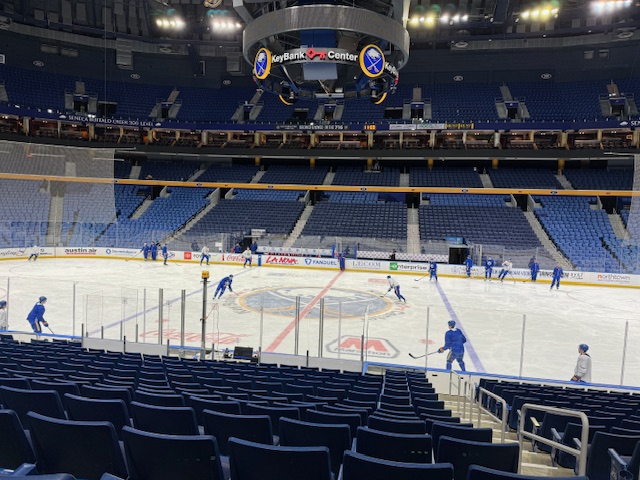
But practices can be hard, too. The Sabres skated hard for about an hour on Tuesday, something that’s rare to do in the middle of the season between games. It wasn’t a bag skate like what fans would demand to have more of during a tough season, but it was as close to one as you’ll get considering they worked on drills and smaller parts to the game that lent themselves to more system-specific things to work on Wednesday. You’re all sick of hearing about how young the team is, but it’s exactly the kinds of things younger teams need to get worked on to improve.
“I love it because then you can challenge yourself,” Dahlin said. “You don’t have to keep it simple, you can try stuff, but practices like (Wednesday) and (Tuesday) were really good because we had high pace and high compete which challenge us and it’s going to translate into games. That’s one of the things we did really, really good last year that when we practiced, we practiced hard. We’ve had two really good practices now and I feel way better than I did two days ago.”
This isn’t to say practice is the be-all, end-all of hockey. It’s not, but the Sabres aren’t in the kind of position to take an unnecessary day off and goof around.
“If it’s going really well, you don’t want to practice as much because you want things to keep going well,” Tuch said. “If it hasn’t been going great, like it has been, sometimes you want to try and get in as many practices as you can, try to get back to it.”
The Sabres schedule stops being light again on Thursday in Montréal and Saturday in Pittsburgh. Following that, the Sabres spend the next two weeks at home with games against Seattle, Ottawa, Vancouver, San Jose, Chicago, and Tampa Bay. That’s a lot of games against teams out of a playoff spot and a few of them are below Buffalo in the standings. Their own playoff hopes are hanging on by a thread and that stretch of games will determine whether we start scouting the draft or figuring out paths to the postseason before February starts.